Once concrete has been poured, it needs to cure before the next step in the construction process can begin. As the concrete cures, the conditions for the floor, surface layers, and other materials to be installed also change. Therefore, it is important to know the moisture level in the concrete before proceeding with the work.
What can happen if the concrete is too damp?
If a moisture-sensitive material is installed against concrete that still contains too much moisture, it can lead to damage or cause the material to fail to function as intended.
At the same time, not all concrete structures dry at the same rate. The drying time is influenced by factors such as the concrete’s composition, the structure’s design, and the ambient temperature and humidity. It is therefore important not to rely solely on how much time has passed since the concrete was poured, but to assess the actual moisture conditions within the structure.
When is moisture measurement relevant?
Moisture measurement can be relevant in several different situations. In new construction and renovation, it is often used as a basis for installing new materials. If moisture damage is suspected, the measurement can also be used to assess the moisture conditions within the structure.
What is measured in concrete?
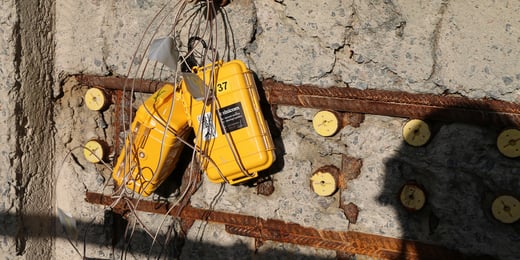
When measuring moisture in concrete, relative humidity (RH) is often used as a measure of the structure’s moisture level. The measurement is typically performed in a drilled test hole where a sensor measures the relative humidity. Since the moisture level can vary between different parts of the structure, it is important to select the measurement point based on the purpose of the measurement.
How do you obtain a reliable measurement result?
For a measurement result to be reliable, more than just the right instrument is required. The choice of measurement point, measurement depth, and preparation of the test hole are some of the factors that influence the result. To measure relative moisture content in concrete, the method developed by the Swedish Council for Construction Competence (RBK) is often used.
In our application article, we walk through how the measurement is performed in practice and what is important to keep in mind at each step. In the article, moisture expert Kim Olmås also demonstrates how the measurement is carried out using two different measuring instruments.
Read the application article: Getting Reliable Results When Measuring Moisture in Concrete




Comments